At 8:15 a.m. in a busy New York hospital, a patient is wheeled in complaining of chest discomfort. Within minutes, electrodes are placed, wires are connected, and a quiet machine begins tracing the electrical rhythm of a beating heart. The information captured in those first few minutes can guide urgent medical decisions. The person operating that machine isn’t a cardiologist. It’s often an EKG technician. If you’ve ever wondered whether you could step into healthcare in a meaningful way—without committing to years of medical school—this path is worth a closer look. Here’s what it really takes to become an EKG technician in New York, from training and certification to what the day-to-day work involves.
What Does an EKG Technician Do?
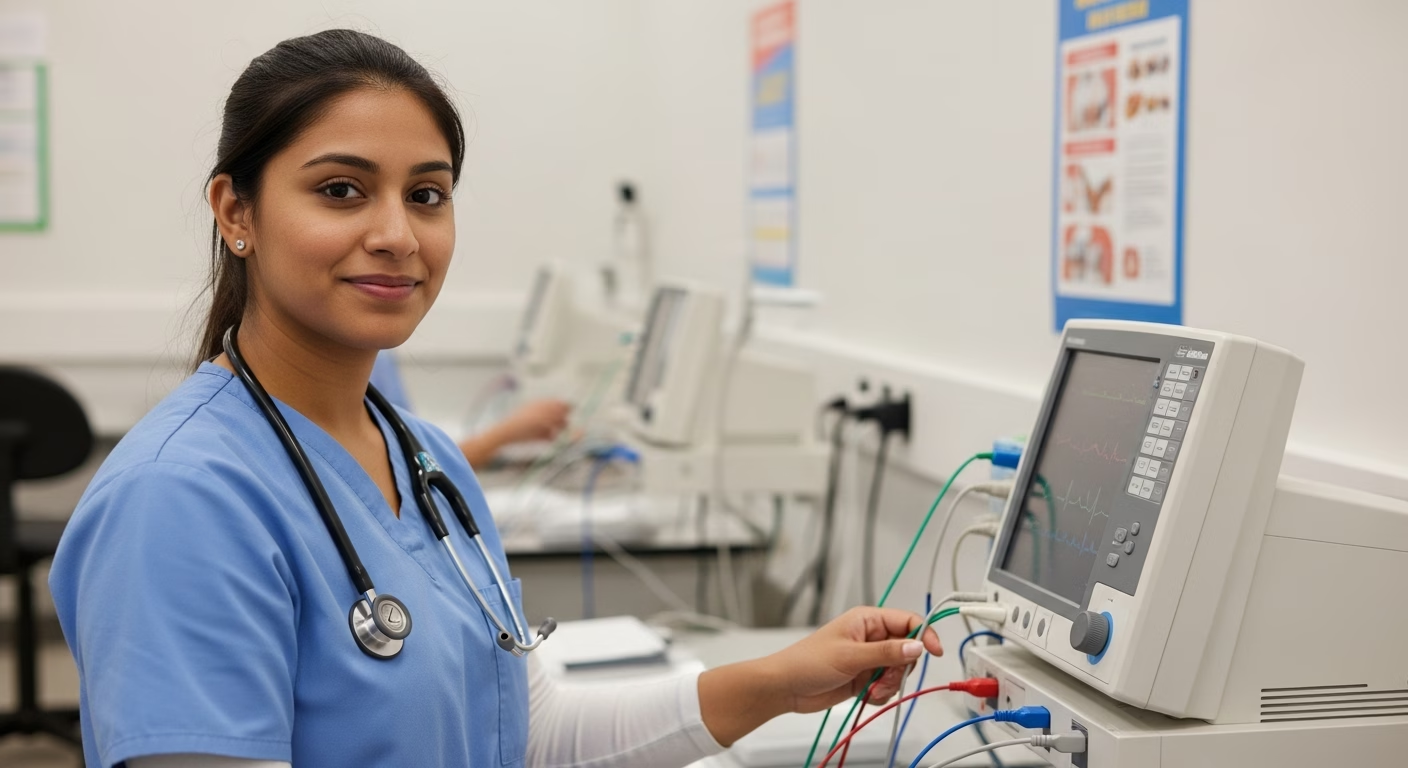
EKG (or ECG) technicians perform diagnostic tests that measure the heart’s electrical activity. These tests help physicians identify irregular rhythms, heart disease, and other cardiac concerns. On any given shift, you might:
- ● Prepare patients for electrocardiogram testing
- ● Place electrodes accurately and safely
- ● Operate EKG equipment and verify clear readings
- ● Monitor patients during procedures
- ● Document results for review by medical staff
It’s technical work—but it’s also personal. Many patients feel anxious before heart testing. Clear communication and a calm presence matter just as much as precision. According to certification standards, ECG technicians are responsible for performing diagnostic tests to assess the patient’s heart rhythm and rate[1]. That responsibility requires focused training and attention to detail.
Step 1: Complete the Right Training Program
If you’re researching how to become an EKG technician in New York, education is your first step. In most New York healthcare settings, employers expect formal training. A structured program helps you build both the technical skills and the clinical awareness needed in real medical environments. The Clinical Technician Program at Manhattan School of Computer Technology (MSCT) includes 600 hours* of instruction, blending online coursework with in-person lab experience. That combination is important. Online learning offers flexibility—especially for adult learners or career changers balancing work and family responsibilities. In-person labs give you the hands-on repetition you need to build confidence with real equipment. A strong EKG-focused curriculum typically includes:
Reading about heart rhythms is one thing. Interpreting them accurately in real time is another.
Step 2: Build Confidence Through Internship Experience
Classroom learning builds knowledge. Clinical experience builds readiness. Many employers in New York look for candidates who have completed supervised clinical hours before entering the workforce. The Clinical Technician Program at MSCT includes 225 hours of internship training, giving students exposure to real healthcare environments. During an internship, you may:
- ● Perform EKGs under supervision
- ● Work alongside nurses and physicians
- ● Practice clinical documentation
- ● Learn how busy healthcare teams coordinate care
- ● Interact with patients in real scenarios
Certification eligibility standards often require documented hands-on performance. For example, candidates may need to provide evidence that they have performed a minimum number of EKGs[2]. Internship hours help bridge the gap between theory and practice—and make your transition into the workforce smoother.
Step 3: Pursue National Certification
New York does not issue a separate state license specifically for EKG technicians, but national certification is strongly encouraged. Employers often prefer certified candidates because certification verifies competency and demonstrates alignment with industry standards. Organizations such as the National Center for Competency Testing (NCCT) outline eligibility criteria and exam requirements for ECG certification[1]. These standards help ensure fairness and consistency for all applicants. Certification exams typically assess:
KEY POINTS:
- ● Knowledge of cardiac anatomy
- ● Rhythm interpretation
- ● Equipment handling
- ● Patient safety protocols
- ● Professional responsibilities
Staying organized during your training—tracking clinical hours and preparing documentation—can make the certification process far less stressful.
Where Can EKG Technicians Work in New York?
New York offers a wide range of healthcare environments. From large hospital systems in Manhattan to outpatient clinics across the boroughs, cardiac testing is a routine part of patient care. You may find opportunities in:
KEY POINTS:
- ● Hospitals and emergency departments
- ● Cardiology practices
- ● Outpatient diagnostic centers
- ● Urgent care facilities
- ● Rehabilitation clinics
In a city that never slows down, healthcare services operate continuously. Diagnostic support staff play a consistent role in that system. Some technicians choose to expand their skill sets over time, pursuing broader clinical training to increase flexibility within healthcare teams.
Why People Choose This Path
For many, the appeal of becoming an EKG technician comes down to practicality and purpose. You can complete focused training without committing to a multi-year degree. You gain hands-on clinical experience. And you work directly with patients in meaningful moments. ECG technicians are allied health professionals responsible for performing diagnostic tests that assess heart rhythm and rate[1]. Accurate readings can influence medical decisions quickly. If you’re analytical, detail-oriented, and comfortable working face-to-face with patients, this role can be a strong fit.
Is EKG Training Part of a Larger Clinical Path?
Some programs offer EKG training as a standalone course. Others integrate it into broader clinical education. The Clinical Technician Program at MSCT includes EKG training within a larger clinical framework. That means students develop multiple healthcare competencies rather than focusing on a single task. For some learners, this broader structure provides additional flexibility after graduation. Instead of qualifying for one narrowly defined role, you may be prepared for positions that require a combination of clinical skills. When comparing training options, look at:
- ● Total program hours
- ● Internship requirements
- ● Certification alignment
- ● Skill breadth
- ● Schedule flexibility
These practical details matter more than promotional language.
Who Tends to Thrive in This Field?
There isn’t one typical background. Some students are recent high school graduates exploring healthcare. Others are adults seeking a career change or reentering the workforce. You might be a good fit if:
- ● You want to enter healthcare without years of schooling
- ● You prefer active, hands-on work
- ● You pay close attention to detail
- ● You’re comfortable communicating with patients
- ● You’re looking for a structured path into the medical field
In a fast-paced environment like New York, reliability and professionalism go a long way.
What to Look for in an EKG Training Program
Before enrolling, ask practical questions:
- ● How many total training hours are included?
- ● Are supervised internship hours part of the program?
- ● Does the curriculum align with certification requirements?
- ● Is in-person lab training provided?
- ● Are instructors experienced in clinical practice?
Sources
75%
Ready?
Is Career Training at MSCT Right for You?
Take Our Career Training Readiness Assessment
This fun, online quiz takes 3-minutes to complete and you’ll get a personalized report. Identify your strengths and social style, plus the career paths you’re a fit for.